2026
Synthesis and optimization of encoding circuits for fault-tolerant quantum computation
T. Peham, M. Steinberg, R. Wille, and S. Heußen
Quantum error correction · Cologne
I develop practical fault-tolerant methods that connect quantum error correction theory with the devices we can build now.
01 / About
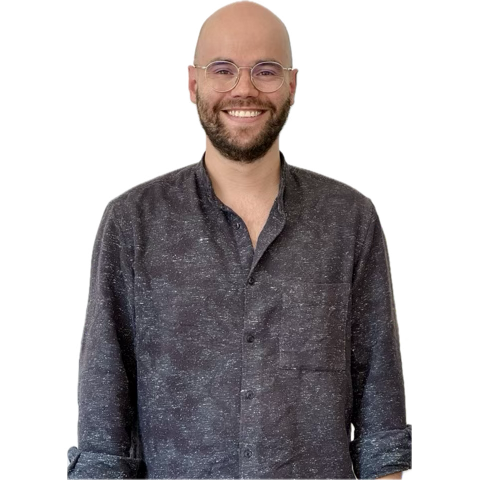
I am a postdoc-level research scientist. My interests are in small-scale fault tolerance and near-term implementations of quantum error correction. This matters because ultra-high-fidelity qubits are needed to practically implement quantum algorithms that are actually useful and cannot be simulated on classical computers.
At neQxt [nɛkst], an ion-trap quantum computing company, I lead the Applied Fault Tolerance Theory team in Cologne, Germany.
02 / Research directions
Designing and benchmarking fault-tolerant logical operations across quantum error-correcting codes. Universality is required to provide an advantage over classical computers.
Adapting error-correction routines to real constraints, including limited connectivity, modular systems, and measurement-free approaches.
Building effective noise models that accurately capture dominant sources of noise and perform classical numerical simulations efficiently.
03 / Selected publications
2026
T. Peham, M. Steinberg, R. Wille, and S. Heußen
2025
S. Heußen · APL Quantum 2, 046113
2025
J. Old, J. Bechar, M. Müller, and S. Heußen
T. Peham, M. Steinberg, R. Wille, and S. Heußen. “Synthesis and optimization of encoding circuits for fault-tolerant quantum computation.” arXiv:2605.15266 ↗
S. Heußen. “Magic state distillation without measurements and post-selection.” APL Quantum 2, 046113 ↗
J. Old, J. Bechar, M. Müller, and S. Heußen. “Addressable fault-tolerant universal quantum gate operations for high-rate lift-connected surface codes.” arXiv:2511.10191 ↗
S. Heußen and J. Hilder. “Efficient fault-tolerant code switching via one-way transversal CNOT gates.” Quantum 9, 1846 ↗
J. Hilder, S. Heußen, A. Ginter, A. Wilke, U. Poschinger, F. Schmidt-Kaler, and W. Wormsbecher. “Quantum Internet in a Nutshell—Advancing Quantum Communication with Ion Traps.” arXiv:2507.14383 ↗
L. Postler, F. Butt, I. Pogorelov, C. D. Marciniak, S. Heußen, R. Blatt, P. Schindler, M. Rispler, M. Müller, and T. Monz. “Demonstration of fault-tolerant Steane quantum error correction.” PRX Quantum 5, 030326 ↗
S. Heußen, D. Winter, M. Rispler, and M. Müller. “Dynamical subset sampling of quantum error-correcting protocols.” Physical Review Research 6, 013177 ↗
S. Heußen, D. F. Locher, and M. Müller. “Measurement-free fault-tolerant quantum error correction in near-term devices.” PRX Quantum 5, 010333 ↗
F. Butt, S. Heußen, M. Rispler, and M. Müller. “Fault-tolerant code-switching protocols for near-term quantum processors.” PRX Quantum 5, 020345 ↗
S. Heußen, L. Postler, M. Rispler, I. Pogorelov, C. D. Marciniak, T. Monz, P. Schindler, and M. Müller. “Strategies for a practical advantage of fault-tolerant circuit design in noisy trapped-ion quantum computers.” Physical Review A 107, 042422 ↗
L. Postler, S. Heußen, I. Pogorelov, M. Rispler, et al. “Demonstration of fault-tolerant universal quantum gate operations.” Nature 605, 675–680 ↗
S. Heußen, C. D. White, and G. Refael. “Extracting many-body localization lengths with an imaginary vector potential.” Physical Review B 103, 064201 ↗
04 / Work with us
We welcome researchers interested in permanent roles, temporary visits and collaborations across quantum error correction, fault tolerance, and quantum computing theory.
Browse open positions05 / Contact
For research questions, collaborations, or opportunities with the team, email is the best place to start.
s.heussen@neqxt.org